

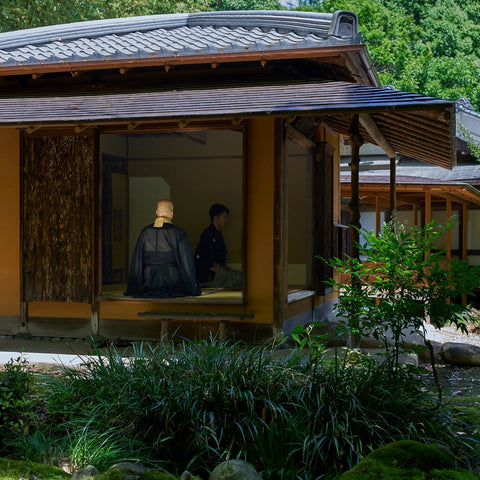
Erin-ji Temple was founded almost 700 years ago. It is said to have begun in the late Kamakura period, in Gentoku 2 (1330), when Nikaido Sadato (Dou), the provincial constable of Kai Province (1267-1335), invited Muso Soseki (1275-1351) and converted his private residence into a Zen temple.

Muso Soseki was a leading monk who represented Japan from the Kamakura to Muromachi periods. He was praised as the "Imperial Teacher of Seven Courts," having received the title of National Teacher from seven emperors during his lifetime and posthumously. Muso Kokushi was also an accomplished scholar of his time, excelling in Chinese poetry and waka, but he was particularly famous as a landscape gardener. He established the style of "Zen temple gardens" and created the aesthetic standards of traditional Japanese culture.
Today, magnificent gardens he designed still remain at Tenryu-ji Temple and Koke-dera Temple (Saiho-ji Temple) in Kyoto, Zuisen-ji Temple in Kamakura, and Kokei-zan Eiho-ji Temple in Mino. The garden at Erin-ji Temple is also designated as a National Place of Scenic Beauty, recognized as a masterpiece by Muso Kokushi.

Erin-ji Temple is also well-known as the family temple of Takeda Shingen (1521-1573), a samurai general from the Sengoku period. Shingen, feared as the "Tiger of Kai," was familiar with Zen from a young age and seriously devoted himself to training by inviting eminent Zen monks from Kyoto.
Later, after inviting Kaikoku Joshu (1502-1582) from Mino, he designated Erin-ji Temple as his family temple and granted it temple lands. After Shingen's death, when the Takeda clan was destroyed by Oda Nobunaga, Erin-ji Temple was also burned down by Oda's forces. At that time, it is well-known that Kaikoku Kokushi, sitting composedly in meditation atop the burning main gate, recited his death poem, "When the mind is extinguished, the fire too is cool."

Erin-ji Temple was subsequently rebuilt under the patronage of Tokugawa Ieyasu (1543-1616). When Yanagisawa Yoshiyasu, a close associate of Tokugawa Tsunayoshi, the fifth shogun, became the lord of Kai, the temple's influence grew under his generous patronage.
Yanagisawa Yoshiyasu revered Takeda Shingen and was proud that his own ancestors were connected to the Takeda family. Later, in the generation of his legitimate son Yoshisato, his remains were moved to Erin-ji Temple. Today, Erin-ji Temple is also the burial site for Yanagisawa Yoshiyasu and his wife.
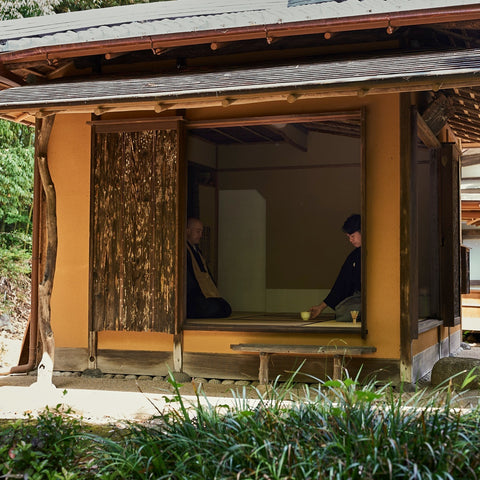
Today, Erin-ji Temple has endured the turbulent waves of the anti-Buddhist movement during the late Edo period and Meiji Restoration, survived a fire in 1906, and passed through the devastation of World War II, maintaining its dignity as one of the leading Zen temples in the Kanto region.